


Blog
How to Read Food Labels: A Simple Guide to Smarter Shopping

A Simple Guide to Smarter Shopping
Every day, we make decisions about the food we buy. Attractive packaging and marketing claims can sometimes make products look healthier than they really are. Learning how to read a food label helps you choose products that match your family's needs, health goals, and budget.
At One Click Maldives, our goal is not only to supply quality food and beverages but also to help families, businesses, cafés, restaurants, schools, and resorts make informed purchasing decisions.
1. Start with the Product Name
The product name tells you what you're buying.
For example:
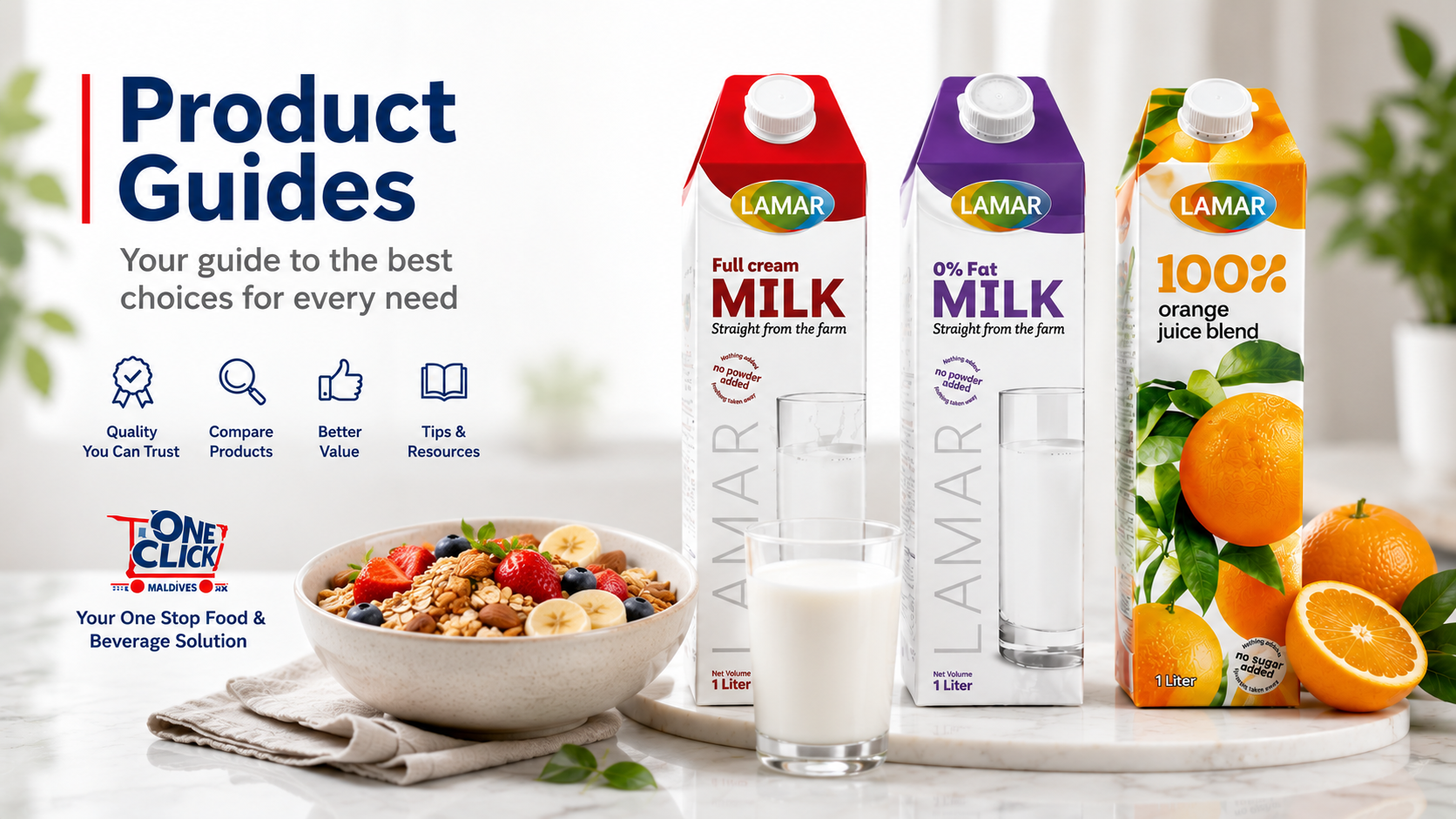
- Full Cream Milk
- 0% Fat Milk
- 100% Orange Juice
- Peanut Butter
- Oat Milk
Don't rely only on the front picture. Always read the actual product description.
2. Check the Ingredients List
Ingredients are listed from the highest amount to the lowest amount.
This helps you understand what makes up most of the product.
A good example:
Milk
- Fresh UHT Milk
Juice
Look for:
- Fruit Juice
- Fruit Concentrate
- No Added Sugar (when applicable)
Foods
Check whether sugar, salt, or artificial ingredients appear near the top of the list.
Generally, shorter ingredient lists are easier to understand.
3. Read the Nutrition Information
The Nutrition Facts panel shows how much nutrition is contained in the product.
Important nutrients include:
- Energy (Calories)
- Protein
- Total Fat
- Saturated Fat
- Carbohydrates
- Sugars
- Fibre
- Sodium (Salt)
Choose products that support your family's nutritional needs.
4. Understand Serving Size
One package may contain several servings.
Always check:
- Serving size
- Number of servings per package
This helps you understand how much nutrition you're actually consuming.
5. Know the Difference Between "No Added Sugar" and "Sugar-Free"
These terms are often misunderstood.
No Added Sugar
No extra sugar has been added during production.
Natural sugars from fruits or milk may still be present.
Sugar-Free
Contains very little or virtually no sugar according to food regulations.
Always check the nutrition panel to confirm.
6. Look at Fat Content
Different products are designed for different lifestyles.
Examples include:
- Full Cream Milk
- Low Fat Milk
- 0% Fat Milk
Choose the option that best fits your nutritional requirements or your healthcare professional's advice.
7. Check Protein
Protein supports muscle growth and helps keep you feeling full.
Milk, dairy products, nuts, and legumes are excellent sources of protein.
8. Watch Sodium (Salt)
High sodium intake may contribute to high blood pressure.
Compare similar products and choose those with lower sodium when appropriate.
9. Check the Expiry Date
Always verify:
- Production Date
- Best Before Date
- Expiry Date
Fresh products provide the best quality and taste.
10. Understand UHT Products
Many people ask what UHT means.
UHT (Ultra High Temperature) is a safe preservation method that heats milk or juice for a few seconds to remove harmful bacteria.
Benefits include:
- Safe to store unopened without refrigeration
- Maintains quality
- Convenient for homes, cafés, offices, schools, and resorts
11. Compare Products Before Buying
Don't compare only the price.
Also compare:
- Ingredients
- Nutrition
- Quality
- Serving size
- Product suitability
- Brand reputation
A product with slightly higher quality may provide better long-term value.
Quick Food Label Checklist
Before buying any product, ask yourself:
✅ What are the main ingredients?
✅ How much sugar does it contain?
✅ Is the fat level suitable for my needs?
✅ How much protein does it provide?
✅ Is the expiry date acceptable?
✅ Is it the right serving size?
✅ Does it offer good value?
One Click Maldives' Commitment
At One Click Maldives, we believe customers deserve clear information—not just attractive packaging.
Our Knowledge Center is designed to help you:
- Understand food labels
- Compare products confidently
- Learn about nutrition
- Discover practical buying guides
- Make better purchasing decisions for your family or business
Whether you're shopping for your home, a café, restaurant, grocery shop, office, school, or resort, understanding food labels helps you choose products with confidence.
Frequently Asked Questions (FAQ)
Why should I read food labels?
Food labels help you understand what's inside a product, compare similar items, and choose options that match your dietary and nutritional needs.
What does "No Added Sugar" mean?
It means no extra sugar was added during manufacturing. Naturally occurring sugars may still be present.
Is UHT milk safe?
Yes. UHT milk is safe, nutritious, and widely consumed around the world. The UHT process extends shelf life while maintaining quality.
Where can I learn more about food products?
Visit the One Click Maldives Knowledge Center for practical guides, product information, healthy living articles, and food buying tips designed for customers across the Maldives.